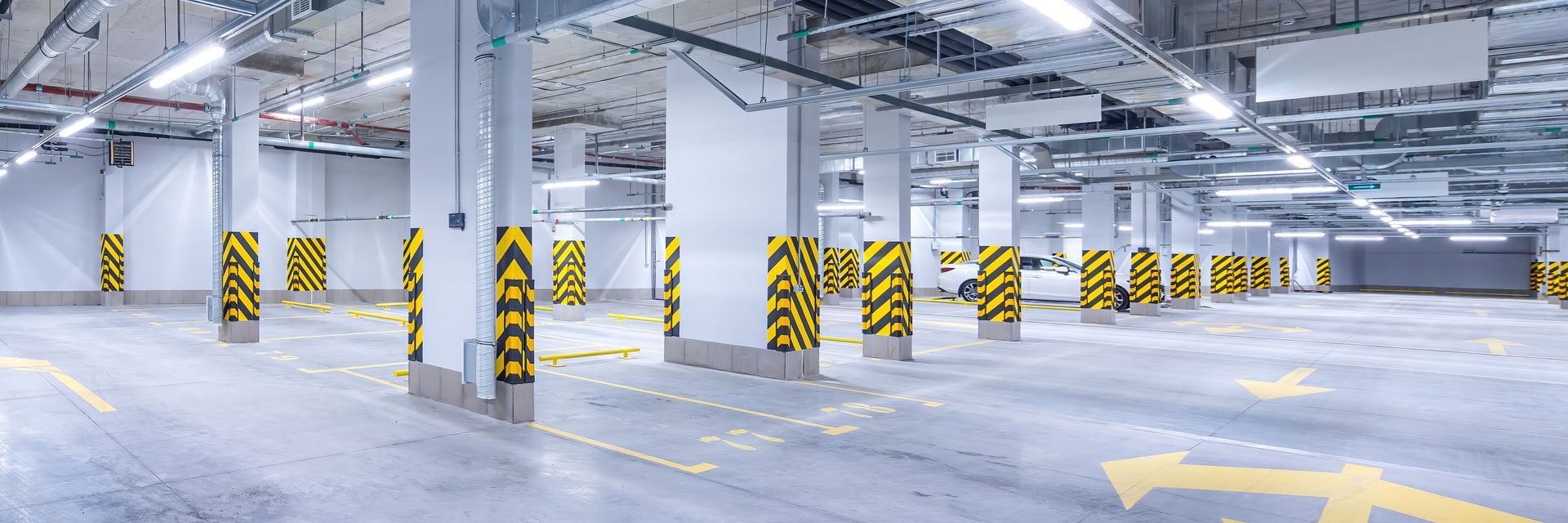
Post-tensioned concrete parking garages display distinct structural failure warning signs including longitudinal cracking along cable paths, sudden deflection changes, and exposed tendon anchorages that require immediate professional evaluation in Troy, NY to prevent catastrophic collapse.
How Do Post-Tensioned Systems Differ from Conventional Concrete?
Post-tensioned concrete uses high-strength steel cables tensioned after concrete curing to create compression forces that counteract service loads, allowing longer spans and thinner slabs than conventional reinforced concrete construction.
Steel tendons run through plastic ducts cast into the concrete slab, then receive hydraulic tensioning that compresses the concrete and creates a structural system that resists bending and cracking. This design enables parking garage decks to span 60 feet or more between support columns compared to 30-40 feet for conventional reinforced concrete. The tensioning process creates a structural element that behaves as a single integrated unit rather than separate concrete and steel components.
When these systems fail, the consequences differ significantly from conventional concrete deterioration because tension loss affects the entire structural span rather than isolated areas.
What Causes Post-Tensioned Cable Failure?
Post-tensioned cable failure occurs when water infiltration corrodes steel tendons, causing loss of tension force that compromises the structural compression system and reduces load-carrying capacity.
Water enters through cracks, construction joints, or damaged anchorage points and travels along tendon ducts, reaching steel cables that lack the concrete cover protection found in conventional reinforcement. Chloride contamination from road salt accelerates corrosion rates significantly. Once corrosion begins, the high-strength steel loses cross-sectional area and tensile strength, reducing the compression force applied to the concrete slab.
Property managers looking to find restoration help in Troy should understand that post-tensioned systems require specialized evaluation beyond standard concrete inspection protocols.
Which Cracking Patterns Indicate Tendon Problems?
Longitudinal cracks running parallel to tendon paths, particularly when accompanied by concrete spalling or rust staining, signal potential cable corrosion and tension loss requiring immediate structural engineering assessment.
These cracks typically appear as straight lines following the tendon layout rather than the random pattern associated with conventional concrete deterioration. Width progression over time indicates active tension loss as corroding cables expand and exert pressure on surrounding concrete. Rust staining near cracks confirms water has reached steel tendons and corrosion has begun.
Transverse cracks perpendicular to tendons may indicate overload conditions or support settlement but generally pose less immediate concern than longitudinal cracking along cable paths.
When Should You Inspect Anchorage Zones?
Anchorage zones require inspection whenever visible deterioration appears near slab edges or column faces, as these critical areas concentrate post-tensioning forces and represent the highest-risk locations for sudden structural failure.
Tendon anchorages transfer all cable tension force into the concrete through bearing plates and wedge assemblies located at slab edges. Concrete cracking, spalling, or exposed hardware in these zones indicates potential anchorage failure that could release tension force suddenly. Water infiltration near anchorages accelerates corrosion of both tendons and anchorage hardware.
Annual anchorage inspections help identify problems before they progress to emergency conditions requiring immediate load restrictions or facility closure.
Can Deflection Changes Signal Structural Distress?
Sudden increases in slab deflection or visible sagging between support columns indicate tension loss from cable corrosion or anchorage failure, requiring immediate load capacity evaluation by a structural engineer.
Post-tensioned slabs maintain relatively flat profiles under normal conditions due to the upward camber created by cable tensioning. When tension force decreases from cable corrosion or anchorage problems, the slab begins to sag under its own weight and applied loads. Deflection changes often become visible before cracking appears, providing an early warning of structural distress.
Facility managers should document any changes in slab profile and seek professional assessment when deflection becomes noticeable to building occupants or maintenance staff.
Why Troy's Industrial History Matters for Parking Structures?
Troy's legacy as a manufacturing center means many commercial properties occupy sites with industrial contamination history, where soil and groundwater chlorides can accelerate post-tensioned cable corrosion through concrete contact with contaminated substrates.
Former industrial sites often contain elevated chloride levels from manufacturing processes or waste disposal that persist in soil and groundwater for decades. When parking structures are built on these sites, chloride-laden moisture migrates upward through concrete slabs and attacks embedded post-tensioning cables. This environmental factor creates accelerated corrosion rates compared to structures on uncontaminated sites.
Site history review should inform inspection frequency and maintenance planning for post-tensioned parking garages in Troy's redeveloped industrial districts.
Protecting Your Facility
Early detection of post-tensioned system distress prevents progressive failure that could require emergency repairs or facility closure. Regular professional inspection identifies problems while repair options remain available and cost-effective.
PCC Contracting provides specialized structural assessment and concrete rehabilitation for post-tensioned parking structures throughout the Capital Region. Plan a comprehensive evaluation of your facility's structural condition.